astoria, queens · fresh pastries
The croissant on your plate at Nova traveled a longer road than the one from the bakery truck — it took about 150 years and crossed from Vienna to Paris before it ever got to 30th Ave.
Where the Croissant Comes From
The croissant's crescent shape traces back to the Austrian kipferl, a dense, bread-like pastry eaten in Austria for centuries before the croissant as we know it existed. The popular legend — that it celebrates a 17th-century Ottoman siege of Vienna — is almost certainly folklore, but the Austria-to-France route is real: in 1839, an Austrian named August Zang opened a Viennese bakery in Paris and introduced the kipferl to French customers.
French bakers took it from there, applying their own laminated-dough technique — folding butter into yeasted dough dozens of times to create the flaky, layered texture the croissant is known for today. That version, closer to what's in the case at Nova, wasn't fully standardized until the early 20th century. It's a French pastry by craft, even if its roots are Austrian.
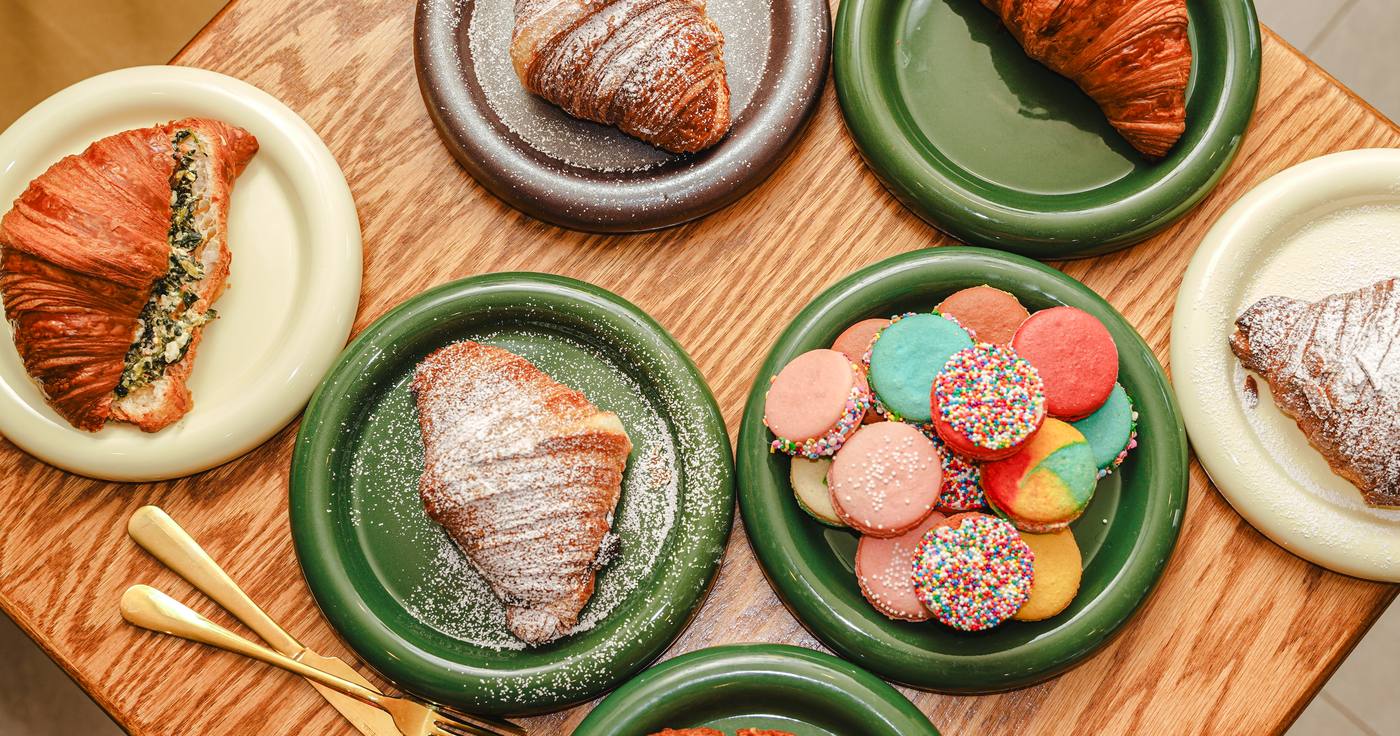
Nova's croissants come from Pain d'Avignon, a bakery we've worked with since day one — the house-made Nutella Croissant and Almond Croissant are the two regulars, alongside a savory House Made Spinach, Feta & Tomato Croissant for anyone who wants their pastry to double as lunch.
They sit in the case next to scones from Hungry Gnome, but the croissants are the first thing most people reach for on a slow morning.
Nova's pastry case is restocked every morning at 41-02 30th Ave, a short walk from the Astoria Blvd N/W station — good timing for a croissant on the way to the train. More on the neighborhood →
Pain d'Avignon, a bakery partner we've worked with since Nova opened — the croissants and a few other pastries come from them daily.
Yes — the House Made Spinach, Feta, Tomato Croissant is on the board alongside the sweeter Nutella and Almond versions.
The kipferl is its Austrian ancestor — a denser, less laminated bread-like pastry. The croissant's flaky, buttery layers come from a French technique of folding butter into the dough dozens of times, developed after the pastry crossed into France.
41-02 30th Ave, Astoria, Queens — two blocks from the N/W train.
 N
N